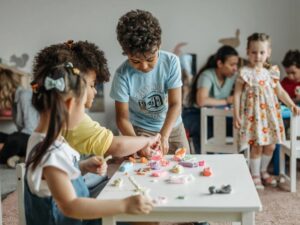
Why Home Support Matters
Children learn best through repetition and real-life experiences. While therapy sessions provide structured learning, home environments offer natural opportunities to practice skills throughout the day.
Home-based learning helps children:
- Generalize skills to real-life situations
- Practice communication in natural settings
- Build consistency through daily routines
- Develop confidence in familiar environments
When parents actively support development at home, progress often becomes faster and more meaningful.
1. Build Communication Through Everyday Talk
One of the most powerful tools for development is simple conversation.
Even before a child is fully verbal, they benefit from hearing language consistently.
Parents can:
- Narrate daily activities (“We are washing hands now”)
- Label objects (“This is your shoe”)
- Use short, clear sentences
- Pause to allow the child to respond
For children with speech delays, every interaction becomes a learning opportunity.
2. Follow Your Child’s Interests
Children learn best when they are engaged.
Instead of directing all activities, follow what your child naturally enjoys:
- If they like cars, use cars for learning colors or counting
- If they like music, use songs to build language skills
- If they like blocks, practice turn-taking and requests
Motivation increases attention, which improves learning.
3. Use Play as a Teaching Tool
Play is one of the most effective ways children learn new skills.
Different types of play support different areas of development:
Functional Play
Using toys appropriately (rolling a car, stacking blocks)
Pretend Play
Encouraging imagination (feeding a doll, acting out routines)
Social Play
Turn-taking, sharing, and interaction with others
Play can also support communication, problem-solving, and emotional development.
4. Create Predictable Daily Routines
Children feel more secure and confident when they know what to expect.
Consistent routines help with:
- Behavior regulation
- Independence
- Transition between activities
Simple routines include:
- Morning routine (wake up, brush teeth, get dressed)
- Mealtime routine
- Bedtime routine
Visual schedules can also help children understand daily expectations.
5. Encourage Independence in Daily Tasks
Even small responsibilities build confidence.
Parents can encourage independence by:
- Letting children try dressing themselves
- Encouraging self-feeding
- Allowing them to clean up toys
- Giving simple instructions step-by-step
It is okay if tasks are not done perfectly. The goal is practice and progress.
6. Support Fine Motor Development
Fine motor skills are important for writing, feeding, and daily tasks.
At home, children can practice:
- Coloring and drawing
- Playing with building blocks
- Using child-safe scissors
- Stringing beads
- Playing with playdough
These activities strengthen hand muscles and coordination.
7. Promote Gross Motor Activity
Physical movement supports overall development.
Encourage activities like:
- Running and jumping
- Climbing playground equipment
- Dancing to music
- Playing catch
- Riding tricycles or bikes
Movement improves strength, coordination, and balance.
8. Use Positive Reinforcement
Children respond well to encouragement and rewards.
Positive reinforcement can include:
- Verbal praise (“Great job asking for help!”)
- Hugs or high-fives
- Extra playtime
- Small rewards
Reinforcing positive behavior increases the likelihood it will happen again.
9. Limit Overuse of Screens
While screens can be educational, too much passive screen time may reduce opportunities for interaction.
Instead, balance screen time with:
- Interactive play
- Reading
- Outdoor activities
- Family conversation
Active engagement is more beneficial for development than passive viewing.
10. Read Together Every Day
Reading supports language, attention, and cognitive development.
Tips for reading:
- Use expressive voice
- Point to pictures
- Ask simple questions
- Let the child turn pages
Even 10–15 minutes daily can make a big difference.
11. Encourage Social Interaction
Social skills develop through practice.
You can support this by:
- Scheduling playdates
- Encouraging sharing and turn-taking
- Modeling polite communication
- Practicing greetings and simple conversations
Social learning helps children build relationships and confidence.
12. Break Tasks into Small Steps
Some children may feel overwhelmed by multi-step instructions.
Instead, simplify tasks:
- “Put on shoes” → “First put on one shoe”
- “Clean your room” → “Pick up toys first”
Breaking tasks into steps helps children succeed more easily.
13. Stay Consistent with Strategies
Consistency is key to progress.
If therapists provide strategies, try to use them regularly at home.
Even small daily practice sessions are more effective than occasional long sessions.
14. Celebrate Small Wins
Progress may be gradual, but every step matters.
Celebrate:
- New words
- Successful routines
- Improved behavior
- Small independent actions
Positive attention builds motivation and confidence.
15. Work Closely with Therapists
Collaboration between parents and therapists is essential.
Stay connected by:
- Attending parent sessions
- Asking questions
- Sharing updates from home
- Practicing recommended activities
Therapists can adjust strategies based on your child’s real-world progress.
Common Mistakes Parents Should Avoid
Expecting Immediate Results
Development takes time and repetition.
Doing Everything for the Child
Over-helping can reduce independence.
Comparing to Other Children
Every child develops at their own pace.
Inconsistent Practice
Skills improve with regular reinforcement.
When to Seek Additional Support
If you notice ongoing concerns such as:
- Delayed speech
- Difficulty with movement or coordination
- Behavioral challenges
- Sensory sensitivities
- Trouble with daily routines
It may be helpful to consult a pediatrician or therapist for evaluation.
Early support can make a meaningful difference.
Conclusion
Supporting your child’s development at home does not require complex tools or specialized training. Simple, consistent actions such as talking, playing, reading, and encouraging independence can significantly enhance growth across communication, motor, social, and behavioral skills.
When combined with professional therapy services, home-based support creates a strong foundation for long-term development. Parents play one of the most important roles in helping children build confidence, independence, and essential life skills.
Every small interaction matters—and over time, these moments add up to meaningful progress.